
The Living Thread: Building a Home That Strengthens Family Life
Home and Family: More Than a Place, More Than People
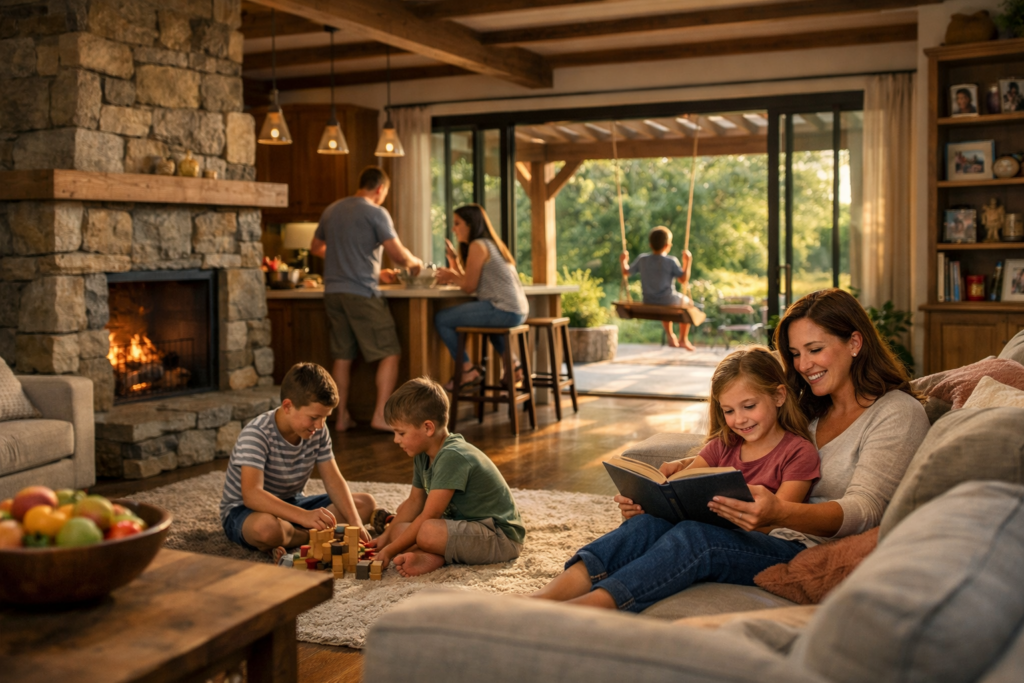
A home is often described as four walls and a roof, but in practice it functions like a shared ecosystem. The family brings personalities, histories, needs, and hopes; the home provides the physical and emotional container where those needs are met—or missed. When home and family work well together, daily life feels steadier: children feel secure enough to explore, adults feel supported enough to cope, and everyone has a place to return to and regroup.
Building that kind of environment is rarely about perfection. It is about clarity, consistency, and small actions repeated over time: a welcoming entryway, a predictable bedtime rhythm, an honest apology after a tense moment, and a shared understanding that everyone belongs.
The Home as a System: Space, Roles, and Rhythm
Every household operates through systems, whether intentional or accidental. Systems include how chores are handled, how decisions are made, how noise is managed, and how people recharge. Healthy systems reduce friction and help families spend more energy on connection than on constant negotiation.
Designing spaces that serve real life
The best home layouts are not the most stylish; they are the most usable. A family’s needs change across seasons and ages, so flexibility matters. Rather than trying to solve everything at once, start with pain points: clutter hotspots, morning bottlenecks, or areas where privacy is hard to find.
- Create “drop zones”: A basket or hooks near the door for bags, keys, and shoes prevents daily pileups.
- Make belonging visible: Use labeled bins or shelves so even young children can put items away independently.
- Build in quiet corners: A chair by a window, a small desk, or a reading nook can become a reset space for any age.
- Keep shared areas easy to reset: Fewer “floating” items in living spaces means faster tidying and less stress.
Roles without rigidity
Families thrive when responsibilities are shared in a way that feels fair—not necessarily equal. Clear expectations reduce resentment. A useful approach is to separate tasks into “daily essentials” (dishes, meals, pet care) and “weekly maintenance” (laundry, cleaning, planning). Then match tasks to age, ability, and schedule.
When assigning responsibilities, focus on competence and contribution rather than punishment. Chores can be framed as participation in a shared life: everyone helps because everyone benefits.
Family Culture: The Values You Practice, Not Just the Ones You Say
Every household has a culture: the tone of conversations, the way stress is handled, the meaning of “family time,” and the standards for kindness. Culture is built less by big speeches and more by repeated patterns—how you greet each other, how you speak during disagreements, and what you do after a hard day.
Rituals that create belonging
Rituals are small, repeatable moments that mark the day or week and offer reliability. They anchor children and adults alike, especially during busy periods or transitions.
- Micro-rituals: A two-minute check-in after school, a goodnight phrase, or a morning playlist.
- Weekly anchors: A Sunday planning session, a shared meal, a walk, or a rotating “choose the movie” night.
- Seasonal traditions: A yearly photo, a first-day-of-school breakfast, or a winter donation project.
The goal is not complexity; it is consistency. Even a simple ritual can become a powerful signal: “You matter here.”
Communication that makes room for emotions
Families communicate in hundreds of tiny exchanges: a look, a sigh, a hurried instruction. Improving communication often starts with slowing down long enough to name what is happening. “I’m overwhelmed” is more useful than “You never help.” “I need ten minutes” is clearer than withdrawal.
A practical habit is to use a three-step approach during tense moments:
- Notice: Identify the emotion or problem without blame.
- Name a need: Ask for space, help, clarity, or comfort.
- Negotiate: Agree on the next small action, not a perfect long-term solution.
Conflict at Home: Turning Friction into Learning
Conflict is unavoidable where people share space, schedules, and resources. The difference between a home that feels safe and one that feels tense is not the absence of conflict, but how it is repaired.
Repair is the skill that changes everything
Repair teaches accountability and restores trust. It can be as straightforward as: “I raised my voice. That wasn’t okay. I’m sorry. Next time I’ll take a break before I respond.” When children witness repair, they learn that mistakes do not end relationships; they are moments for growth.
Consider establishing a household rule that anyone can request a pause during an argument. A pause is not avoidance; it is a commitment to return calmer and more respectful.
Raising Children in a Home That Supports Independence
A supportive home environment helps children develop capability rather than dependence. Independence grows when kids are trusted with meaningful tasks, allowed to try, and guided through mistakes without shame. This includes practical skills (packing a bag, preparing simple food) and social-emotional skills (apologizing, asking for help, managing disappointment).
Two principles help:
- Make expectations predictable: Clear routines reduce power struggles.
- Focus on coaching, not controlling: Offer choices within boundaries: “Do you want to do homework before or after snack?”
Caring for Adults in the Family: Partners, Grandparents, and the “Sandwich” Years
Home and family responsibilities often expand beyond parenting. Many households support aging parents, extended relatives, or friends who function like family. This can be deeply meaningful—and also exhausting. Healthy caregiving requires boundaries, honest planning, and shared decision-making whenever possible.
Helpful practices include keeping a visible family calendar, holding brief weekly logistics meetings, and separating “urgent” from “important” so long-term needs (health appointments, finances, rest) do not disappear under daily chaos.
Making Home Feel Like Home: Comfort, Safety, and Identity
Comfort is not only furniture; it is emotional climate. A home feels welcoming when it balances togetherness and privacy, order and lived-in warmth. Consider small upgrades that influence daily mood:
- Light and sound: Warm lighting and manageable noise levels can reduce irritability and fatigue.
- Shared aesthetics: Family photos, children’s art, and meaningful objects strengthen identity and continuity.
- Safety basics: Clear walkways, stocked first-aid supplies, and secure storage for hazards reduce stress for everyone.
Conclusion: A Home Built in Moments
Home and family are built less by grand gestures and more by ordinary decisions repeated with care: how you speak when you are tired, how you welcome someone who had a hard day, how you divide responsibilities, and how you repair after conflict. Over time, these choices become the living thread that holds a household together. The most nourishing homes are not flawless—they are responsive, honest, and rooted in the shared belief that everyone deserves to feel safe, seen, and supported.
Listings Related to the Article: The Living Thread: Building a Home That Strengthens Family Life

Moonwalk Rentals
We offer a variety of rental options to elevate your special occasions, including moonwalks, bounce houses, inflatable water slides, obstacle courses, and full-service party packages. Perfect for children’s birthdays, backyard barbecues, family reunions, and more. Our top-rated services are available across the United States.
- Category
- Home and Family » Party Planning

Restroom Trailer Rentals & Shower Trailers
Imperial Restrooms offers top-tier mobile restroom trailer rentals, shower trailer rentals, and porta potty rentals, ensuring impeccable sanitation for large outdoor events. As a trusted leader in the industry, we provide premium-quality restroom solutions for a wide range of occasions, including weddings, Hollywood movie sets, commercial shoots, and more.

Chicago Deck & Roofing Services | Deck Builders in Chicago Area
We are roofing and deck contractors serving both residential and commercial clients in Chicago. Our team consists of proficient and experienced professionals across various domestic disciplines.
- Category
- Home and Family » Home Improvement
More Articles Like: The Living Thread: Building a Home That Strengthens Family Life

Beyond the Checklist: Building Health and Wellness That Lasts
Health and wellness are more than avoiding illness—they’re daily habits that support your body, mind, and environment. This guide breaks down practical, sustainable ways to improve energy, resilience, and long-term well-being.

Signal, Spin, and Screens: Understanding News and Media in a Connected Age
News and media shape how societies understand events, choose leaders, and respond to crises. This article explains how modern news is produced, distributed, and consumed—and how to evaluate it with confidence.

Beyond the Textbook: How Education and Reference Shape Smarter Learning
Education and reference resources work together to turn curiosity into reliable knowledge. This article explores how to choose, evaluate, and use reference materials to learn efficiently in school, work, and everyday life.
