
Beyond the Spotlight: How Arts and Entertainment Shape What We Feel, Share, and Remember
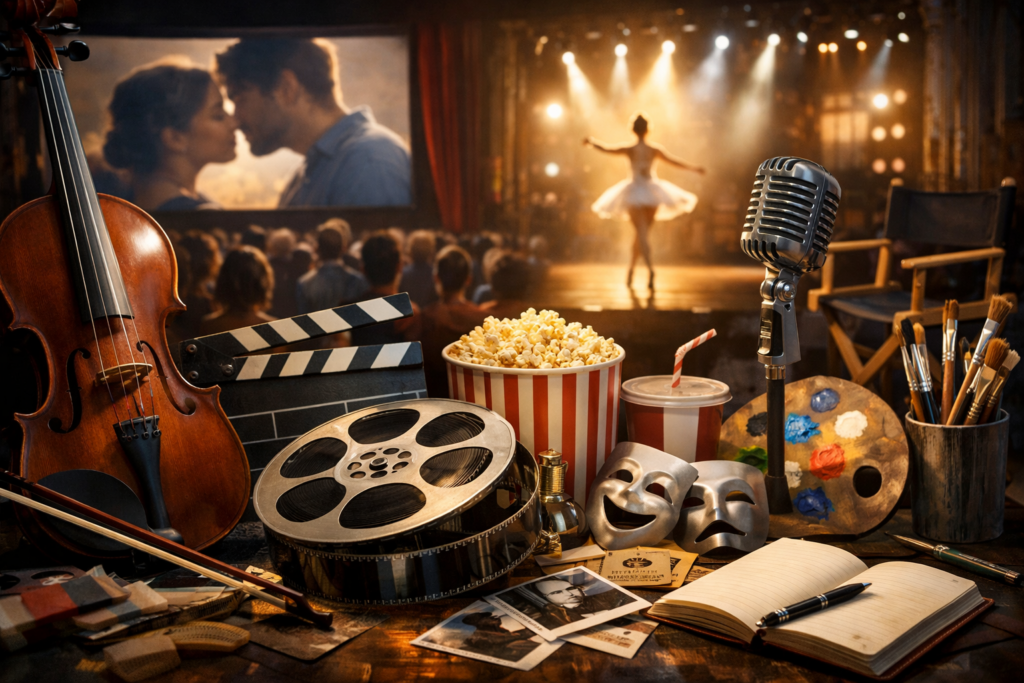
The Living Ecosystem of Arts and Entertainment
Arts and entertainment form a wide, interconnected ecosystem that includes everything from painting, dance, and theatre to film, music, comedy, games, and digital creation. Sometimes they are treated as separate worlds—“fine art” on one side and “popular entertainment” on the other—but in practice they constantly borrow from each other. A museum exhibit can inspire a blockbuster’s visual language, while a viral song can send listeners searching for older genres, historic movements, or regional traditions.
At their best, arts and entertainment do three things at once: they help individuals make meaning, they help communities build shared experiences, and they help societies document their values and conflicts. Whether a person is moved by a symphony, captivated by a television series, or drawn into a street mural, the underlying function is similar: these experiences offer a structured way to feel, reflect, and connect.
Why People Seek Art and Entertainment
The appetite for artistic and entertaining experiences is not merely a desire to pass time. It’s tied to basic human needs—curiosity, belonging, catharsis, and exploration. A story can become a safe rehearsal space for difficult emotions. A concert can deliver collective joy and physical release. A game can provide challenge, mastery, and social bonding.
- Emotional processing: Art provides language for feelings that are otherwise hard to name.
- Identity and belonging: Genres, fandoms, and local scenes help people find “their people.”
- Perspective-taking: Narratives can expand empathy by placing audiences inside unfamiliar lives.
- Ritual and memory: Annual festivals, favorite films, and shared songs become markers of time.
From Stage to Stream: How Distribution Changed the Experience
Historically, most entertainment was anchored to a place: a theatre, a public square, a club, a cinema. Today, global distribution is often instantaneous. Streaming platforms, social media feeds, and mobile devices have lowered barriers to discovery and allowed niche audiences to thrive. A dance crew can gather millions of views without a traditional gatekeeper, and an independent filmmaker can reach global viewers through curated platforms.
Yet convenience comes with trade-offs. When content is abundant and always available, attention becomes the scarce resource. Creators may feel pressure to design work for algorithms rather than for artistic intent, emphasizing quick hooks, frequent updates, or easily summarized concepts. Many audiences also report “choice fatigue,” in which endless options make it harder to commit to anything deeply.
The Rise of Hybrid Formats
Digital culture encourages blending. Live theatre incorporates projection mapping; musicians release interactive albums; museums offer augmented reality layers; comedians build audiences through short-form clips before touring. Hybrid formats are not a replacement for traditional forms, but an expansion of how stories and aesthetics can be delivered.
The Creative Economy: Work Behind the Magic
Arts and entertainment are major economic engines. They create jobs for visible performers and artists, but also for a large network of professionals: editors, lighting designers, sound engineers, set builders, animators, costume makers, game developers, marketers, ticketing staff, venue operators, and educators. In many cities, cultural districts boost tourism and support nearby restaurants and retail.
At the same time, creative work often comes with instability: irregular income, short-term contracts, expensive equipment, and the expectation of unpaid “exposure.” Sustainable arts ecosystems depend on fair pay, accessible training, transparent contracts, and funding models that value both mainstream hits and experimental work.
- Public funding: Grants, municipal programs, and cultural endowments can protect non-commercial art.
- Private support: Sponsorships and philanthropy can enable ambitious projects, though priorities may vary.
- Direct-to-audience models: Memberships, crowdfunding, and patron platforms strengthen creator independence.
Culture, Representation, and the Stories That Get Told
Every artistic landscape reflects decisions about whose voices are amplified. Representation matters not only on screen or on stage, but also behind the scenes—who writes, directs, publishes, curates, or controls budgets. When diverse creators have real authority, the result is not just “more variety,” but more authenticity in the details: language, humor, family dynamics, settings, and conflicts that feel lived-in rather than generalized.
However, representation is not a simple checklist. Audiences increasingly notice when inclusion is superficial, when stereotypes are repackaged, or when cultural elements are used without context. A healthier approach focuses on collaboration, credit, and care—ensuring creators can tell their own stories while inviting cross-cultural exchange that is respectful and informed.
Community Spaces: Where Art Becomes a Social Force
Not all cultural power comes from global platforms. Local venues, libraries, community theatres, galleries, and festivals shape daily life. They provide accessible entry points for young talent and create shared experiences that can’t be replicated by solitary scrolling. These spaces also support civic identity—what a city funds, hosts, and celebrates signals what it believes about itself.
Community-based arts initiatives can also address social challenges: youth programs that reduce isolation, public art that revitalizes neighborhoods, or storytelling workshops that preserve oral history. When participation is prioritized—inviting people to create, not just consume—arts and entertainment become tools of agency.
Technology’s New Palette: AI, Immersion, and Interactivity
Technology continues to reshape what counts as art and how it’s made. Virtual production techniques allow filmmakers to create expansive worlds with less travel. Game engines power not only games but also animated films and real-time theatre backdrops. Immersive experiences invite audiences to walk through a narrative rather than watch it passively.
AI tools add a new layer. They can help with drafting, generating concepts, upscaling visuals, or assisting with localization. But they also raise urgent questions about training data, consent, originality, and compensation. The most constructive path forward involves clear labeling, robust licensing systems, and ethical standards that protect human creators while allowing experimentation.
How to Engage More Deeply as an Audience Member
Enjoyment doesn’t have to be passive. Small choices can strengthen the arts ecosystem and enrich personal experience.
- Mix the familiar with the new: Pair a favorite genre with one unfamiliar artist or form each month.
- Support locally: Attend community shows, buy from local makers, or visit independent cinemas.
- Pay for what you value: Tickets, merchandise, memberships, and rentals directly sustain creators.
- Learn the credits: Noticing designers, editors, and crew reveals how collaborative art really is.
Looking Ahead: A Future Built on Curiosity and Care
Arts and entertainment will keep evolving as platforms change and audiences reshape tastes. Yet the central purpose remains: to translate human experience into shared forms—sound, image, movement, narrative, and play. In a world crowded with information, these experiences help people remember what it feels like to be alive alongside others. The future of arts and entertainment depends not only on innovation, but also on the everyday choices that protect creative labor, widen access, and keep cultural spaces open to experimentation.
Listings Related to the Article: Beyond the Spotlight: How Arts and Entertainment Shape What We Feel, Share, and Remember
Sierra Care
Sierra Care is California’s leading 24-hour congregate living health facility (CLHF), specializing in subacute care for patients with spinal cord injuries, traumatic brain injuries, pulmonary disease, neuromuscular conditions, congenital conditions, and other medically complex conditions.
- Category
- Health and Wellness » Medicine
MoSMB
MoSMB (SMB with Mojo) represents Ryussi’s cutting-edge Server Message Block (SMB) server solution tailored for the data storage sector. It facilitates seamless file sharing across diverse environments encompassing both Windows and non-Windows platforms.
- Category
- Computers and Internet » Software
More Articles Like: Beyond the Spotlight: How Arts and Entertainment Shape What We Feel, Share, and Remember
Signal, Spin, and Speed: Navigating News and Media in the Attention Economy
News and media shape what societies notice, debate, and ultimately do. Understanding how information is produced, distributed, and monetized helps readers separate reliable reporting from noise and manipulation.

Beyond the Checklist: Building Health and Wellness That Lasts
Health and wellness are more than avoiding illness—they’re daily habits that support your body, mind, and environment. This guide breaks down practical, sustainable ways to improve energy, resilience, and long-term well-being.
The Living Thread: Building a Home That Strengthens Family Life
Home and family shape each other every day through routines, spaces, and the way we handle conflict and care. This guide explores practical, human-centered ways to create a home environment that supports connection, responsibility, and belonging.
