
Beyond the Textbook: How Education and Reference Shape Smarter Learning

Understanding Education and Reference
Education is the structured process of developing knowledge, skills, and judgment—whether through schools, workplace training, self-study, or community learning. Reference, by contrast, focuses on quick access to verified information: definitions, background context, data, procedures, and sources. When combined, education provides the learning path and goals, while reference supplies the facts and evidence that keep learning accurate and up to date.
In practice, the boundary between them is fluid. A student might use a history textbook (education) alongside an encyclopedia entry (reference) and primary sources (reference) to build a deeper understanding. A professional might learn a new tool via a course (education) while relying on official documentation (reference) to solve problems day to day.
Why Reference Matters in Modern Learning
The volume of available information is enormous, but not all of it is trustworthy. Reference materials help learners navigate complexity by offering curated, sourced, and frequently updated content. Strong reference habits also reduce overreliance on memory, which is prone to bias and forgetting.
- Accuracy: Vetted sources reduce misinformation and help learners cite correctly.
- Efficiency: Reference tools deliver targeted answers without reading an entire course or book.
- Depth: Good references link to related concepts, supporting interdisciplinary learning.
- Independence: Learners can troubleshoot, research, and verify claims without constant instructor support.
Key Categories of Reference Resources
Not all references serve the same purpose. The most effective learners choose tools that match the question they are trying to answer.
General Reference
- Encyclopedias and handbooks: Broad overviews, key terminology, and introductory context.
- Atlases and gazetteers: Geographic information, boundaries, demographics, and spatial context.
- Almanacs and yearbooks: Periodic snapshots of statistics and events.
Subject-Specific Reference
- Specialized dictionaries and glossaries: Technical definitions and usage within a field.
- Standards and codes: Engineering, safety, legal, medical, and industry guidelines that define compliance.
- Compendia and manuals: Condensed, practical knowledge such as lab procedures or clinical references.
Scholarly and Primary Sources
- Peer-reviewed journals: Research findings and methodologies; best for current, evidence-based understanding.
- Datasets and repositories: Raw or processed data supporting claims and enabling replication.
- Primary sources: Original documents, interviews, artifacts, and historical records.
Digital-First Reference
- Library databases: Curated access to journals, ebooks, and indexing services.
- Official documentation: Authoritative guidance for software, APIs, devices, and platforms.
- Open educational resources (OER): Free, adaptable learning and reference materials with open licenses.
Evaluating Reference Quality: A Practical Checklist
Because reference materials often influence decisions and learning outcomes, evaluation is essential. The same source might be acceptable for a quick overview but insufficient for academic or professional use.
- Authority: Who wrote or published it? Look for credentials, institutional backing, or a reputable editorial process.
- Evidence and sourcing: Are claims supported by citations, data, or clear methodology?
- Currency: When was it last updated? Some fields (medicine, technology, law) change rapidly.
- Purpose and bias: Is the goal to inform, sell, persuade, or entertain? Funding and sponsorship can shape content.
- Scope: Does it match the level you need—overview, technical detail, or comprehensive coverage?
- Cross-verification: Can you confirm key points using independent sources?
How Education Uses Reference to Build Durable Knowledge
Education is most effective when it moves beyond passive reading and toward active engagement. Reference resources support that shift by enabling learners to check understanding, expand context, and practice research skills.
From Memorization to Meaning
When learners use references to clarify terms, compare perspectives, and examine evidence, they build conceptual frameworks rather than isolated facts. For example, a biology student studying genetics might use a textbook for the curriculum path, a scientific glossary to interpret terminology, and journal articles to see how concepts apply in real research.
Learning as a Cycle
- Question: Identify what you don’t know or what seems uncertain.
- Locate: Choose an appropriate reference type (overview vs. technical vs. primary).
- Evaluate: Check authority, date, and citations.
- Apply: Use the information to solve a problem, write an argument, or make a decision.
- Reflect: Note what worked and what needs deeper study.
Reference Skills That Transfer Across Life
Reference literacy is not only academic; it is a practical life skill. It helps people interpret medical information responsibly, understand financial terms, follow safety guidelines, and evaluate news claims. In workplaces, strong reference habits make employees faster and more reliable because they can confirm details and learn independently.
These skills also support ethical behavior. Proper citation and careful sourcing reduce plagiarism and encourage transparent thinking. More broadly, reference habits build intellectual humility: the willingness to verify rather than assume.
Making the Most of Libraries and Learning Platforms
Libraries remain one of the most powerful bridges between education and reference. Beyond lending books, they provide research assistance, databases, archival materials, and instruction in information literacy. Many also offer community workshops, language learning tools, and technology access.
Digital learning platforms add flexibility through videos, practice exercises, and guided courses. When paired with high-quality references—such as scholarly databases or official documentation—these platforms become more than content delivery systems; they become environments for credible, self-directed learning.
Practical Habits for Everyday Learners
- Create a trusted starter set: Save a small list of reliable references for your main interests and responsibilities.
- Take notes with sources: Record where information came from so you can verify it later.
- Use layered reading: Start with an overview, then move to specialized references, then to primary research if needed.
- Ask better questions: Convert vague goals (“learn economics”) into precise prompts (“what is inflation and how is it measured?”).
- Revisit and update: Replace outdated bookmarks and re-check claims when the context changes.
Conclusion: A Partnership That Strengthens Understanding
Education provides direction—what to learn and why it matters. Reference provides grounding—what is true, what is supported, and where to look next. Together they form a resilient approach to learning that works in classrooms, careers, and daily life. In a world where information is abundant but trust is fragile, the ability to learn with reliable reference is a decisive advantage.
Listings Related to the Article: Beyond the Textbook: How Education and Reference Shape Smarter Learning
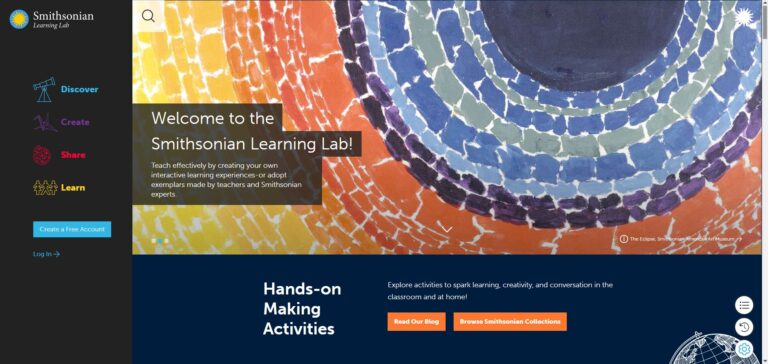
Learning Lab
Learning Lab, part of the Smithsonian Institution, is a dynamic online platform offering a wealth of educational resources. Dive into interactive learning experiences, leveraging the Smithsonian’s vast collections to inspire curiosity and creativity across diverse subjects.
- Category
- Education and Reference » K through 12
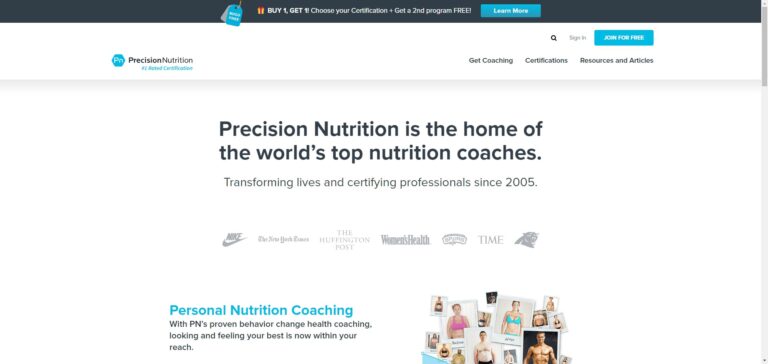
Precision Nutrition
Precision Nutrition focuses on providing evidence-based nutrition and fitness information. The website offers articles, guides, and resources to help individuals make informed choices about their diet and exercise routines. It also provides coaching programs for personalized health and fitness support.
- Category
- Health and Wellness » Nutrition
More Articles Like: Beyond the Textbook: How Education and Reference Shape Smarter Learning

Signal, Spin, and Speed: Navigating News and Media in the Attention Economy
News and media shape what societies notice, debate, and ultimately do. Understanding how information is produced, distributed, and monetized helps readers separate reliable reporting from noise and manipulation.

Beyond the Checklist: Building Health and Wellness That Lasts
Health and wellness are more than avoiding illness—they’re daily habits that support your body, mind, and environment. This guide breaks down practical, sustainable ways to improve energy, resilience, and long-term well-being.

The Living Thread: Building a Home That Strengthens Family Life
Home and family shape each other every day through routines, spaces, and the way we handle conflict and care. This guide explores practical, human-centered ways to create a home environment that supports connection, responsibility, and belonging.
